


02 Sep 2026 College Student Congress
Henry Clay Center – 2026 College Student Congress Report
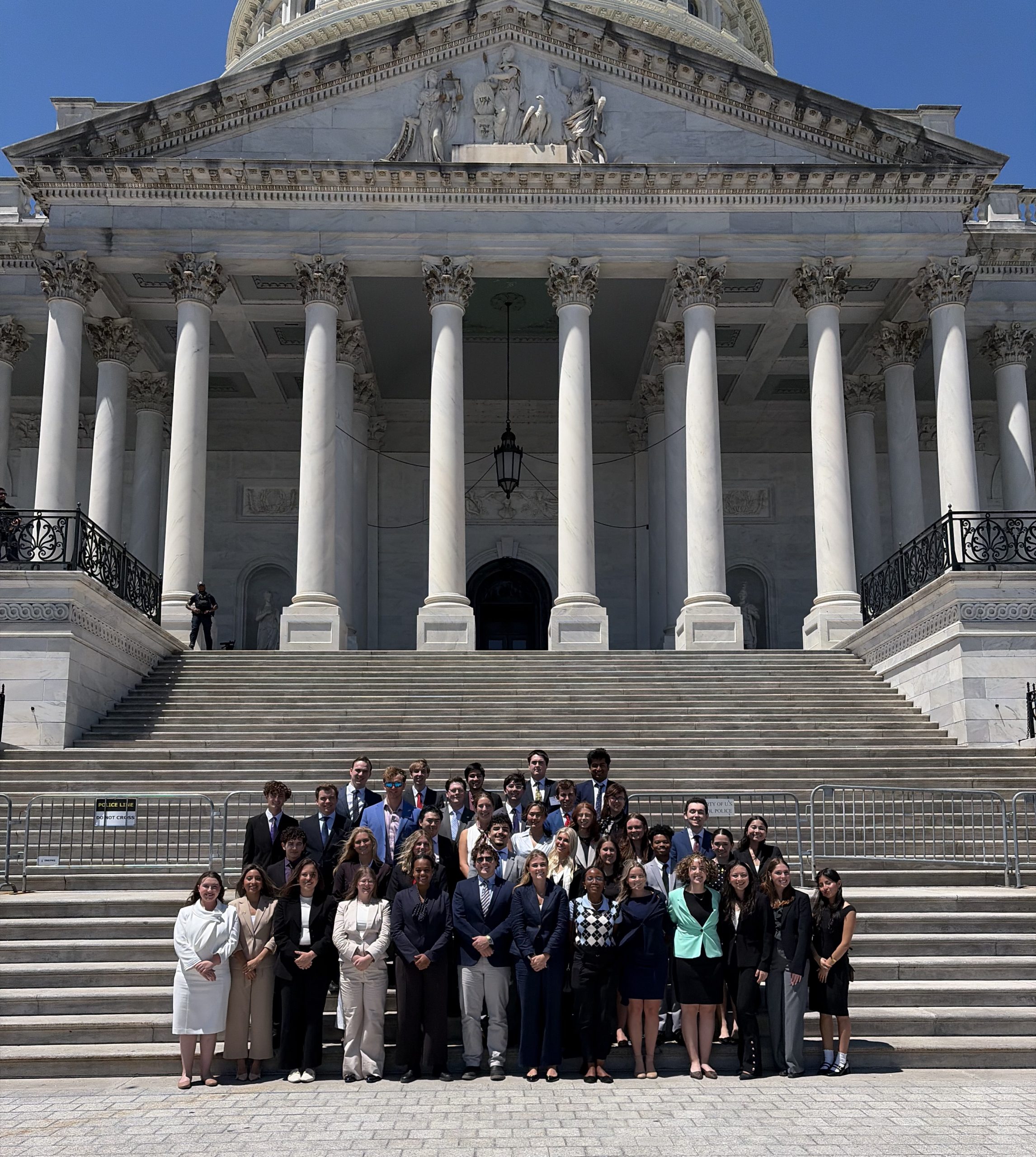
We are pleased to report that the 2026 Henry Clay Student Congress was another tremendous success. The exceptional academic qualifications, leadership qualities, and potential for future career success of the selected students made this one of the most promising cohorts assembled for our Student Congress.
We can report that their program participation, communication, and discussion skills, combined with their fresh and exciting approaches for the most contentious issues, surpassed our high expectations. Above all, know that they gave us confidence that their future roles as national, state, and local leaders will assure that civil dialogue and compromise will remain part of our democratic process.
As supporters of the Henry Clay Center and the Student Congress, we sincerely thank you for your continued commitment to the goals of the Clay Student Congress and your support of the Center’s programs and activities.
The growing national recognition of the Clay Student Congress program is evidenced by both the number and quality of the 280 applications received from students across the nation. Applications were submitted by students attending Ivy League institutions, major public research universities, and leading public and private liberal arts colleges across the country.
The students selected, including one from each state and the District of Columbia, were chosen from a pool of 280 applicants and had records of academic achievement, service, and leadership that placed them among the brightest and most promising rising senior college students in the nation. Their applications, upon which selections were based, included information about their home state, college, academic record, student and community activities, and leadership experiences. Their impressive accomplishments made the selection process challenging, while also making it inspiring and enjoyable. (See attached list of attendees.)
The students came to the Clay Student Congress prepared and ready to engage fully in their roles and responsibilities. They worked effectively together to gain an understanding of how civil discourse on national and regional issues can lead to policy decisions that more effectively enhance the well-being of our nation’s citizens. As a result, the Clay Student Congress strengthened the students’ understanding and belief that citizens with differing opinions can, through fact-based civil discourse, achieve forward-focused policy solutions. That knowledge and those insights will shape their vision for the future, influence their career aspirations, and strengthen their capacity for regional and national leadership.
COLLEGE STUDENT CONGRESS: Lexington/U of Kentucky: May 18 – May 23
The Lexington week of the Student Congress took place from May 18 through May 23. Students arrived on May 18 and were welcomed the following day, May 19, at Ashland, the historic home of Henry Clay, by Henry Clay Center Co-Chair and Founder, Bill Giles. In his welcoming remarks, students were congratulated on their selection for this year’s program, particularly notable given the exceptional quality and quantity of applicants and were encouraged to fully engage in every aspect of the week. They were advised that from past experience such active engagement would have a transformative impact on their future careers.
Additional greetings were shared by Jim Clark, Executive Director of Ashland, The Henry Clay Estate, who offered reflections on Henry Clay and the rich history of Ashland. These remarks were well received and provided meaningful context for the week’s program, emphasizing the importance of Henry Clay’s legacy, particularly his dedication to resolving national policy conflicts through civil discourse and fact-based compromise. Ashland Curator, Eric Brooks, presented aspects of the estate that reflect a conflicted time in our nation’s history.
The welcoming comments stressed the vital importance of programs like the Henry Clay Student Congress, given the divisions and severe partisanship sweeping across our country. The speakers also emphasized the program’s primary focus on civil discourse in addressing and solving our nation’s conflicts and disagreements. They also indicated that if we are going to maintain our democracy and all the benefits that each of us receives every day from our freedom, we must engage in our communities as well as in our national policy issues. They emphasized that the program is designed to assist students in effectively achieving such engagement.
The students were also challenged to commit themselves to offering original ideas and thoughts regarding the policy issues they would be focusing on during the week. They were encouraged to use the experience of the upcoming week to gain a richer understanding of the importance of, and strategies for achieving, civil discourse and compromise regarding contentious national issues.
The theme of the 2026 Henry Clay Student Congress program was intergovernmental policy and programs (current State vs. Federal issues). As such, the program focused on challenging the students to analyze the problems, challenges, and possible solutions to issues associated with programs that can conflict federal, state, and local governments.
To pursue that theme, the students were divided into four public policy areas and charged to develop policy recommendations that would improve the impact and efficiency of their policy topic. The policy topics for the program included: 1) Intergovernmental Public Health Care Policy and Programs, 2) Intergovernmental Disaster Response Policy and Programs, 3) Intergovernmental Homeland Security Policy and Programs, and 4) Re-envisioning U.S. International Treaty and Alliance Policy.
The students assigned to each topic were further divided into two subgroups and asked to develop recommendations to improve the impact and efficiency of their intergovernmental policy area. After developing their policy recommendations, the students participated in a “compromise” exercise, which resulted in a set of policy recommendations that they presented to a panel of judges on the final day of the Lexington portion of the Student Congress. The excellent panel, which included Brad Cowgill, attorney, owner of Smart Claim, and former State Budget Director; Richard Dawhare, family and personal attorney; Terry Samuels, President of Kentucky Science and Technology Corp.; and Rufus Friday, former President and Publisher of the Lexington Herald-Leader, challenged the students with questions about their analysis of the policy issue, their assessment of policy options, and the implications of their policy recommendations.
The compromise presentations were streamed live and are available for viewing on the Clay Center website: www.henryclaycenter.org.
The students’ grasp and understanding of these critically important national issues, the originality of their proposed policy positions achieved through civil discourse, and their ability to articulate the rationale behind their policy positions impressed the panel of judges and the attendees at the week’s culminating presentations.
While in Lexington, the students also benefited from presentations regarding the policy process by Martin School Director of Undergraduate Studies, Cory Curl, a discussion of the challenges of intergovernmental programs by Clay Center Board Member and former Kentucky Transportation Cabinet Secretary and Former Lexington Mayor, Jim Gray, a presentation about the complexities of intergovernmental health policy by University of Kentucky Senior VP for Health and Public Policy, Mark Birdwhistell and a discussion of the “Art of Compromise” by former Kentucky State Representative and Clay Center Board Member, Sannie Overly, and Fayette County Attorney and former Lexington/Fayette County Councilperson, Angela Evans.
Insights regarding the challenges of developing efficient public policy options and strategies were provided by Clay Center Board Member and former Clay Center Director, Rob Givens (now KY Chief of Staff for US Senator, Rand Paul) and Patterson School Director, Dr. Joe Young. The students also enjoyed enthusiastic discussions of the importance of engaging in public policy issues by former Kentucky Secretary of State, Adan Edelen of Edelen Renewables and Clay Center Co-Chair, David Adkins, CEO and Executive Director of The Council of State Governments.
The students also participated in a reception and networking event at the King Alumni House sponsored by the Martin School, the Patterson School, and the UK Rosenberg College of Law. A closing dinner to conclude the Lexington week was held at Spindletop, the University of Kentucky’s faculty, alumni, and staff club. At the dinner, Martin School Director, Dr. Spiro Maroulis, delivered an inspiring message about the importance of engaged citizenship, and he challenged the students to enter the public policy arena now and begin assuming leadership roles, rather than waiting until later in their careers.
COLLEGE STUDENT CONGRESS: Washington, D.C. May 24 – May 29
After completing the Lexington, Kentucky portion of the Student Congress, the students traveled to Washington, D.C. to participate in the D.C. portion of the Clay Congress program. The D.C. portion of the program was designed to provide the students with exposure to and greater understanding of the federal public policy development and implementation process. As such, the D.C. program included discussions with the players and organizations involved in developing, approving, and ultimately implementing federal public policy.
The students arrived in D.C. on May 24, the Sunday before Memorial Day. After being briefed about the upcoming week’s program and activities, the students had the opportunity the following day, Memorial Day, to visit the memorials and museums on the mall before having a welcoming dinner at a Navy Yard restaurant that evening before the busy and full week started the next morning.
The second day of the D.C. program, May 26, started with a visit to the U.S. Supreme Court. The students were welcomed by Clay Center Board Member, Douglas Kiker, who introduced Roman Martinez, a former Supreme Court Clerk and partner of Latham and Watkins, LLP. Mr. Martinez discussed how the Court selects petitions to be heard, the role of Clerks in researching and drafting opinions, and how the Chief Justice assigns the writing of Court opinions and dissents. Having personally argued cases before the Supreme Court, he also shared his experience preparing and presenting cases before the Court.
After the Supreme Court visit, the students moved to the offices of the Federal Reserve where they met with Federal Reserve Governor, Christopher Waller. Governor Waller shared his experience at the Fed and the operations of the Open Market Committee and issues they consider at their regular meeting regarding interest rate policy. They followed the Fed session with a meeting with staff of the Bipartisan Policy Center. The BPC staff discussed how they approach issues in a manner which mitigates partisan disagreements in order to analyze an issue and consider policy solutions.
The following day, May 27, the students attended an informative session with Leanne Wilson, COO of the National Governors’ Association. She discussed the role of the NGA and how they approach and discuss the policy relationship of the states and the federal government.
The students also met with Robert Costa, #1 NYT Best Selling Author and National Correspondent for “CBS News Sunday Morning”. It was the fourth consecutive year he has met with the students, whom he advised to avoid individuals who talked only in pre-set agenda talking points.
Following the Robert Costa session, the students proceeded to the German Embassy. They met with Christina Wegelein, Minister Counselor in the Embassy’s Political Department. Christina held an active discussion session with the students about issues of concern to Germany, U.S.–German relations, the war in Ukraine, as well as emerging U.S. and German relations with China.
The day’s activities concluded with an informative session regarding the role of Washington D.C. lobbyists who discussed their role, how they maintain credibility and their contributions to the federal policy making process. The session was hosted by Clay Board Member, Robert Mangas, partner of the law firm Greenburg-Traurig. Rob also serves on the Martin School Board of Visitors.
On Thursday, May 28, the students were guests of Marcia Howard and Andrew Olson of the Federal Funds Information for States office at the Hall of the States. The FFIS provides the states with historical and current data regarding the federal funds’ allocations, by program, to the states which are based on various allocation formulas. The FFIS staff presentation assisted the student’s understanding of the reality of and reasons for differential fund allocations for the various intergovernmental programs.
The day’s program was concluded by a visit to the offices of U.S. Kentucky Senator Mitch McConnell. His staff provided a tour of the capitol and answered questions about the role of the Senator’s staff and related issues.
The farewell event of the 2026 Clay Congress was an award recognition and celebratory dinner at the Congressional Golf Club hosted by Clay Center Board Member, H. Mac Riley. It was an exciting evening peaked with the long-awaited announcement of the winning policy compromise team—The Disaster Assistance Team—and the awards for the “Best Team Compromisers”.
After the evening’s program, the students shared their thoughts about the Clay Congress and the various activities they participated in during the two-week program. Many of the students indicated that the Clay Congress was extremely rewarding and was a “life and career changing experience.”
“Bipartisanship is a word we often throw around. So many programs or lectures attempt to teach this concept, but the Student Congress is an incredible opportunity to actually put that word into practice. Meeting a student from every state, with varying life experience and political views from our own, gives anyone interested in public service such an incredible perspective and network to learn from. I cannot recommend this program enough to anyone who is interested. It is truly one of a kind. You will walk away with new skills in compromise, a renewed sense of dedication to public service, incredible mentors, access to an amazing alumni network, and 50 new friends!”
– Lilly Gessner, 2026 Maryland Representative (University of Georgia)
Overall, the students were exceptional, the program presenters were well prepared, and their discussions enhanced the students understanding of the purposes for and challenges of programs planned, structured, and delivered via multiple levels of government. They also gained a greater understanding of the need for continued review and modifications of intergovernmental programs if they are going to meet the changing needs of citizens in an efficient and effective manner. True to the Henry Clay Center’s mission, they studied and applied civil dialogue in the pursuit of compromise on these complex issues.
The continued support, ideas, and involvement of the Henry Clay Center Board and our many program supporters make the Student Congress possible. We are sincerely grateful for your commitment to this increasingly nationally recognized and important program. Here’s to the 2026 College Student Congress Cohort!